

In homes where one room serves multiple purposes, art can help define zones, add structure, and tie together various elements. By choosing the right pieces, you can make spaces feel intentional and functional without adding physical dividers. Here’s how:
- Use art to define zones: A gallery wall or large artwork can visually separate areas like a workspace within a living room.
- Pick cohesive colours: Match art to the room’s palette to create harmony.
- Consider size and placement: Artwork should align proportionally with furniture and be hung at eye level (around 152 cm from the floor).
- Try flexible displays: Use art ledges or adhesive strips for easy rearranging.
- Incorporate textures: Pair prints with plants, textiles, or layered frames for depth.
For multi-functional spaces, Boho-style art works well due to its vibrant patterns and adaptability. Made-to-order options, like those from OMG Kitty, offer flexible sizes and eco-conscious prints, making it easy to style spaces that evolve over time.
Key takeaway: Thoughtfully selected and positioned art can transform multi-use spaces, helping them feel organised and stylish while maintaining functionality.
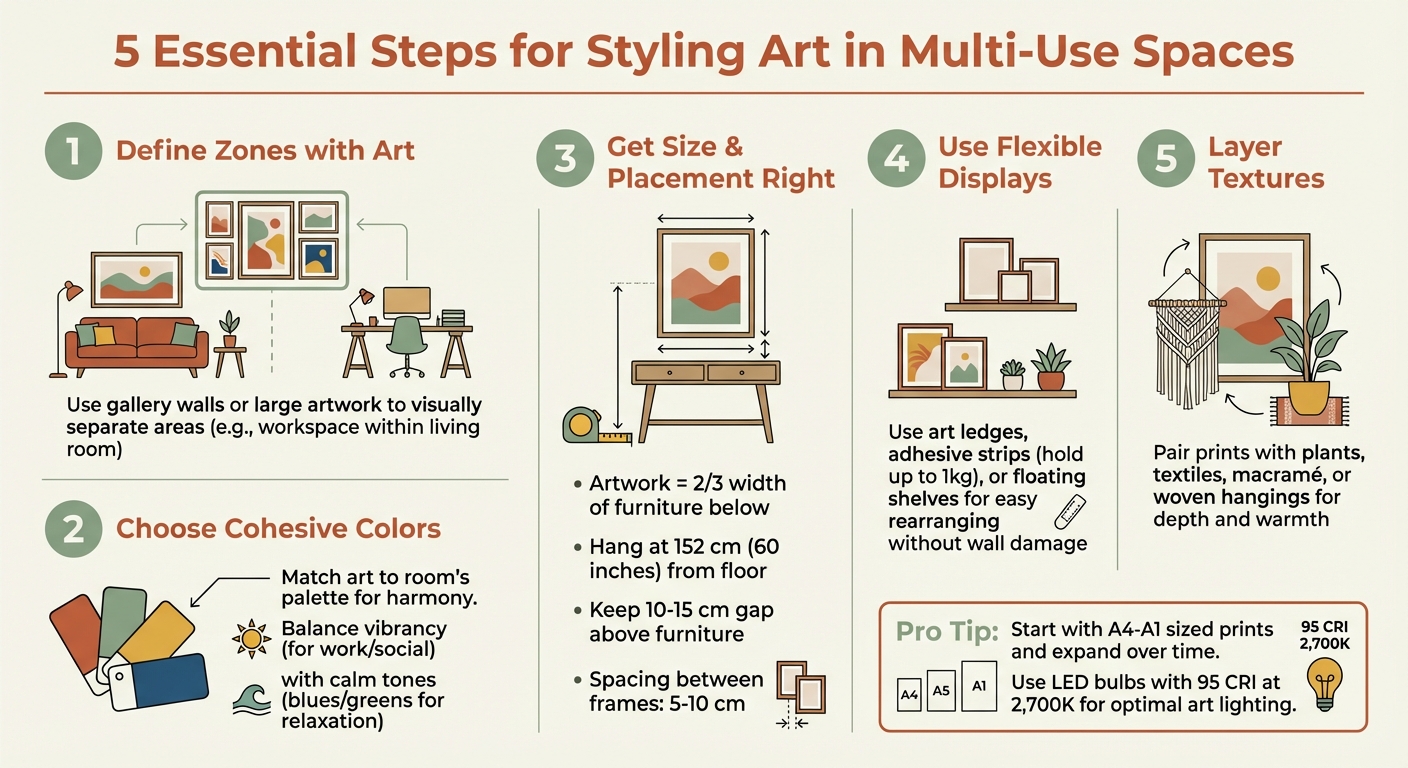
5 Essential Steps for Styling Art in Multi-Use Spaces
Multifunctional Home Zones & Spaces | And Then There Was Style
Choosing Art Prints for Multi-Use Spaces
Picking the right art for rooms that serve multiple purposes requires a thoughtful approach. The goal is to find prints that enhance various activities without creating visual discord. Sticking to a cohesive colour scheme can help the artwork blend seamlessly with the space, making the overall design feel harmonious rather than chaotic. For example, in a living room that also functions as a dining area, consider prints that balance vibrancy and calm - lively colours can spark creativity during work or social hours, while soothing shades like soft blues and greens encourage relaxation when it's time to unwind. This balance ensures your space remains both stylish and functional.
Size and placement are just as important as the art itself. Ideally, artwork should cover about two-thirds of the width of the furniture it hangs above - whether that's a sofa, desk, or sideboard. To maintain visual balance, the centre of the piece should be positioned roughly 60 inches (152 cm) from the floor, which aligns with the average eye level. Keeping these proportions consistent across different zones helps unify the space, even when it serves multiple functions.
Why Boho-Style and Uplifting Designs Work Well
Bohemian-inspired prints are particularly well-suited to multi-functional spaces. With their vivid colours, botanical motifs, palm trees, and playful lines, they bring a lively yet inviting energy to any room. Their versatility means they can easily adapt to various settings - whether in an entryway, living area, or bedroom - making them a great choice for spaces with changing roles.
Interior designer Sophie Robinson appreciates the flexibility of gallery walls for such spaces:
One thing I really love about a gallery wall is the way it all can grow organically over time. You can switch pictures around and add and subtract.
This adaptability is especially handy in rooms where functions might evolve. Mixing different types of artwork - like sketches, paintings, and textured pieces - adds depth and variety, reflecting the dynamic nature of multi-use spaces while maintaining a cohesive look.
Made-to-Order Options from OMG Kitty
OMG Kitty’s made-to-order prints provide a practical solution for styling dual-purpose spaces. Available in standard sizes ranging from A4 (21 cm × 29.7 cm) to A1 (59.4 cm × 84.1 cm), these prints are ideal for everything from compact desk corners to larger dining areas. The sizing system is particularly user-friendly: two prints of one size equal the next size up (e.g., two A2 prints combine to match the size of one A1 print). This makes it easier to plan layouts, whether you're creating a balanced gallery wall or a symmetrical arrangement.
Printed on 210gsm fine art paper, the prints can be ordered framed or unframed. Framing options include 22mm wide wooden frames in oak, white, or black finishes, allowing you to customise the look to suit your space. Because these prints are made to order and shipped sustainably from the UK, you can start small - perhaps with a few pieces - and expand your collection over time as your needs and space evolve. This approach lets you adapt your décor without locking into a permanent setup from the start.
Arranging Art in Multi-Functional Rooms
The way you arrange art can help define distinct zones within multi-functional spaces. As highlighted earlier, art can act as a visual boundary - imagine a gallery wall behind a desk anchoring a workspace within a larger open-plan area. When grouping pieces, aim for balance on either side of a central line. This symmetry becomes even more important in spaces that serve multiple purposes, as the arrangement needs to look cohesive from various angles.
To avoid unnecessary wall damage, lay out your arrangement on the floor first, using actual prints. For a polished look, keep the spacing between frames consistent - 5–10 cm works well, or as little as 3 cm in tighter areas. This consistency is especially crucial when the art is viewed from different perspectives in a multi-functional room. Adhesive command strips are a great option for flexible, damage-free displays. These simple steps lay the groundwork for creating dynamic and versatile arrangements.
Gallery Walls and Art Ledges
Gallery walls are a versatile choice for spaces that evolve over time. You can begin with a few pieces and gradually expand your collection, swapping prints in and out as your needs or tastes change. To keep the display feeling intentional rather than chaotic, incorporate a "thread of continuity" - this could be matching frame colours (such as black or oak) or a consistent colour palette across different styles of art. For a more relaxed, salon-style vibe, let the arrangement flow naturally, avoiding perfectly straight edges.
Art ledges and shelves take flexibility to another level. These allow you to layer and prop prints without committing to nails or hooks, making them perfect for frequent rearranging or testing new pieces. Keep ledges to a maximum of two rows to maintain an open and uncluttered look while still adding visual interest. This approach lets you experiment - rotate seasonal prints, lean larger pieces, or even incorporate small 3D items like plates or textiles for added texture.
Mixed Displays and Oversized Pieces
Oversized art pieces can make a bold statement, but they need space to breathe to avoid overwhelming the room. Helen Armon-Jones, founder of The Art Buyer, shares:
A large landscape painting can create the illusion of space and light, while a bright, zesty and boldly coloured artwork can bring in warmth.
When combining oversized pieces with smaller ones, start by hanging the largest piece - the "hero" - first. Use it as your focal point, then arrange the smaller pieces around it. The radial method works well here: place the large central piece and arrange the smaller ones at consistent distances around it. This creates a sense of harmony without making the display feel cluttered. For seated areas, mount art slightly lower - around 140–145 cm - compared to the standard 152–160 cm height. This ensures the pieces are at the perfect eye level for the space.
sbb-itb-78c8b21
Adding Layers and Textures with Art
Art prints don’t need to stand alone on your walls. By pairing them with textures like macramé, woven hangings, or even plants, you can create a sense of depth and character in multi-purpose spaces. As Studio McGee highlights:
You can combine sketches, paintings, family photos, and even textural pieces for depth and dimension.
This layered approach is particularly effective in rooms with dual functions, as it introduces warmth and versatility.
For a creative twist, try leaning framed prints against mirrors or arranging them on bookshelves. Ben Cotton, Director at Hang Up, suggests:
If you have shelves, then placing a picture or two within them can be a good way to add an illusion of depth and some extra space.
This method not only creates visual movement but also makes it easy to swap pieces around. Pairing artwork with natural touches, like potted plants, adds a relaxed and organic feel.
House & Garden offers another idea:
a wall hanging sourced from a vintage textile dealer is the backdrop for a sofa… The flowing fabric adds warmth, colour and a sense of whimsy to the space.
Using fabric backdrops behind artwork can help define zones in multi-functional spaces while adding a dynamic visual element. This layering technique blends art seamlessly with décor, balancing neutral tones and eclectic styles.
Blending Art with Neutral and Eclectic Décor
To enhance these flexible art arrangements, start with a neutral backdrop. Shades like white, cream, or soft beige provide the perfect canvas for bold botanical prints or textured hangings, ensuring they pop without overwhelming the room.
Wil Law, Home-design Stylist at John Lewis, shares this advice:
To make a gallery wall look impactful, mix all the mediums up… mix screen prints with photography, drawings, and even children’s artwork for a collected look.
Complete the space by incorporating soft throws, cushions, or woven accents nearby. These elements not only tie the room together but also create a cosy, welcoming atmosphere.
Practical Styling Tips for Dynamic Spaces
Swapping, Scaling, and Lighting Art for Flexibility
Dynamic spaces thrive on versatility, and the art you choose should reflect that. Floating ledges are a fantastic option - they let you switch out pieces easily without the need for constant drilling or hammering. This is especially handy for rooms that serve dual purposes, like a home office that occasionally transforms into a guest bedroom or a living area that doubles as a workout space.
When placing art above furniture, aim for the artwork to cover about two-thirds of the furniture’s width. For spaces with low ceilings, hanging art vertically can help create the illusion of height. To keep everything looking cohesive, ensure the bottom edge of your frame is 10 to 15 centimetres above the furniture below .
Lighting plays a crucial role in how art is perceived, especially in spaces with varying light conditions. Harry Triggs, Co-founder of TM Lighting, highlights the importance of layering light:
To create a warm, homely feeling, a lot of people like to use floor lamps or table lamps, but they can flatten the room... you need to add a secondary layer to pinpoint individual features in the room, such as a beautiful artwork.
For accurate colour representation, opt for LED bulbs with a Colour Rendering Index (CRI) of 95 or higher. Standard LEDs often fall short, displaying only 80–85% of the colour spectrum. Triggs suggests using bulbs with a 2,700 Kelvin temperature for a cosy, inviting atmosphere, though he notes that while 3,000K enhances colour rendering, it can feel a bit stark.
If you’re renting or enjoy frequently rearranging your space, damage-free fixings like 3M Command adhesive strips are a game-changer. These hold up to 1kg and cost around £3 per pack, making them perfect for repositioning art without leaving marks. For a more casual, flexible approach, larger pieces can simply be propped on mantels or sideboards, letting you adapt your display as needed.
These practical tips work seamlessly with earlier strategies for organising spaces that serve multiple functions.
Affordable Bundles and Shipping from OMG Kitty
Once you’ve mastered flexible styling, the next step is finding the right art. OMG Kitty simplifies this process with made-to-order prints that come ready to hang. Their uplifting boho-inspired designs are perfect for dynamic spaces, offering a variety of sizes and eco-friendly printing options as mentioned earlier. Plus, they provide free UK delivery and worldwide tracked shipping. Whether you’re curating a rotating display on floating ledges or arranging a balanced setup above your multifunctional desk, OMG Kitty’s range combines affordability with the adaptability needed for multi-use spaces.
Conclusion: Key Takeaways for Styling Art in Multi-Use Spaces
Styling art in multi-use spaces is all about thoughtful selection, placement, and flexibility. Start by choosing pieces that suit the purpose of each area - calming landscapes for relaxation zones and bold, energetic prints for workspaces - while ensuring a consistent colour palette ties everything together. Keep proportions in mind by selecting artwork that aligns well with the furniture below it, creating a balanced and grounded look.
Gallery walls and mixed displays are a great way to inject personality without overwhelming the room. Aim for even spacing of 5–7 centimetres between frames, and experiment with a variety of mediums like photography, sketches, and paintings to add depth and interest.
Adaptability is key in spaces with changing functions. Use floating ledges, adhesive mounts, or simply lean pieces on mantels to make it easy to rearrange your display as needed. Lighting also plays a vital role - opt for LED bulbs with a 95 CRI and a colour temperature of 2,700 Kelvin to bring warmth and accurate colour representation.
For a hassle-free option, OMG Kitty offers made-to-order prints in standard sizes (A4 to A1). Their cheerful, boho-inspired designs are perfect for multi-use spaces, and with worldwide tracked shipping, refreshing your walls is simple. Ultimately, the secret lies in choosing art that resonates with your personal style and displaying it in ways that evolve alongside your space.
FAQs
How do I choose the right art for a room with multiple uses?
When picking art for a multi-use space, aim for pieces that complement the room's various functions while showcasing your personal taste. Choose artwork that sets the right tone - whether you want the space to feel calming, energising, or inspiring. Using a consistent colour scheme or theme can help unify the room, even if you mix different styles or sizes of art.
Where you place the art plays a big role in defining the room's zones. For example, hanging a piece above a sofa can emphasise a lounging area, while placing art near a desk can boost focus. Smaller walls can benefit from well-chosen pieces to add character. To maintain visual balance, make sure the artwork's size matches the furniture nearby - the 2/3 rule can be a handy guide. Hanging art at eye level (around 145–150 cm from the floor) also helps create a welcoming and harmonious look.
By selecting versatile, meaningful art and carefully planning its placement, you can design a space that’s both functional and stylish, perfectly suited to its multiple uses.
What are the best ways to hang art without damaging your walls?
To display your art without harming your walls, try damage-free options like removable adhesive strips, putty, or magnetic hangers. These work well for lightweight posters and prints, and they come off cleanly without leaving marks. For heavier or framed pieces, consider using wall plugs or anchors suitable for your wall type to provide sturdy support with minimal impact.
If you do end up with small holes, they’re easy to fix with wall filler. A spirit level is a handy tool to ensure your artwork is straight, helping you avoid extra holes or adjustments. With the right approach and a little attention to detail, you can showcase your art beautifully while keeping your walls intact.
Why is boho-style art a great choice for multi-use spaces?
Boho-style art is an ideal choice for spaces that serve multiple purposes. Its eclectic mix of global-inspired patterns, earthy tones, and vibrant colours creates a warm and welcoming vibe, making it easy to blend with various decor styles and functions within the same room.
The laid-back, flexible nature of this design makes it perfect for balancing the needs of dual-purpose spaces, like a home office that also functions as a guest room or a living area that doubles as a dining space. Plus, its adaptability allows you to personalise and refresh your room’s look without being tied down by strict design rules.