

Natural materials like cotton, linen, silk, and wood bring texture, warmth, and eco-friendly qualities to boho art, making them ideal for cosy, layered designs. They are renewable, biodegradable, and align with sustainability goals but can be costly and require maintenance. Synthetic options, such as polyester, acrylic, and resin, offer durability, affordability, and vibrant colours, making them practical for humid or high-traffic spaces. However, they lack the organic charm of natural fibres and contribute to long-term waste.
Key Takeaways:
- Natural Materials: Biodegradable, renewable, and add a tactile, earthy feel. Ideal for art and interiors with a soft, organic aesthetic.
- Synthetic Materials: Durable, cost-effective, and resistant to wear but less eco-friendly and often feel artificial.
- Budget and Space: Choose natural fibres for intimate spaces and synthetic options for durability in challenging environments.
- Sustainability: Look for certifications like FSC or GOTS for responsible sourcing.
Quick Comparison:
| Feature | Natural Materials | Synthetic Materials |
|---|---|---|
| Eco-friendliness | Renewable, biodegradable | Non-renewable, long-lasting waste |
| Durability | Prone to wear, creasing | Long-lasting, resilient |
| Cost | Higher | Lower |
| Aesthetic | Organic, textured feel | Polished, modern look |
| Maintenance | Requires care (e.g., UV protection) | Easy to clean, low upkeep |
Your choice depends on your priorities, design needs, and budget. Balance aesthetics, practicality, and environmental impact to create the perfect boho-inspired space.
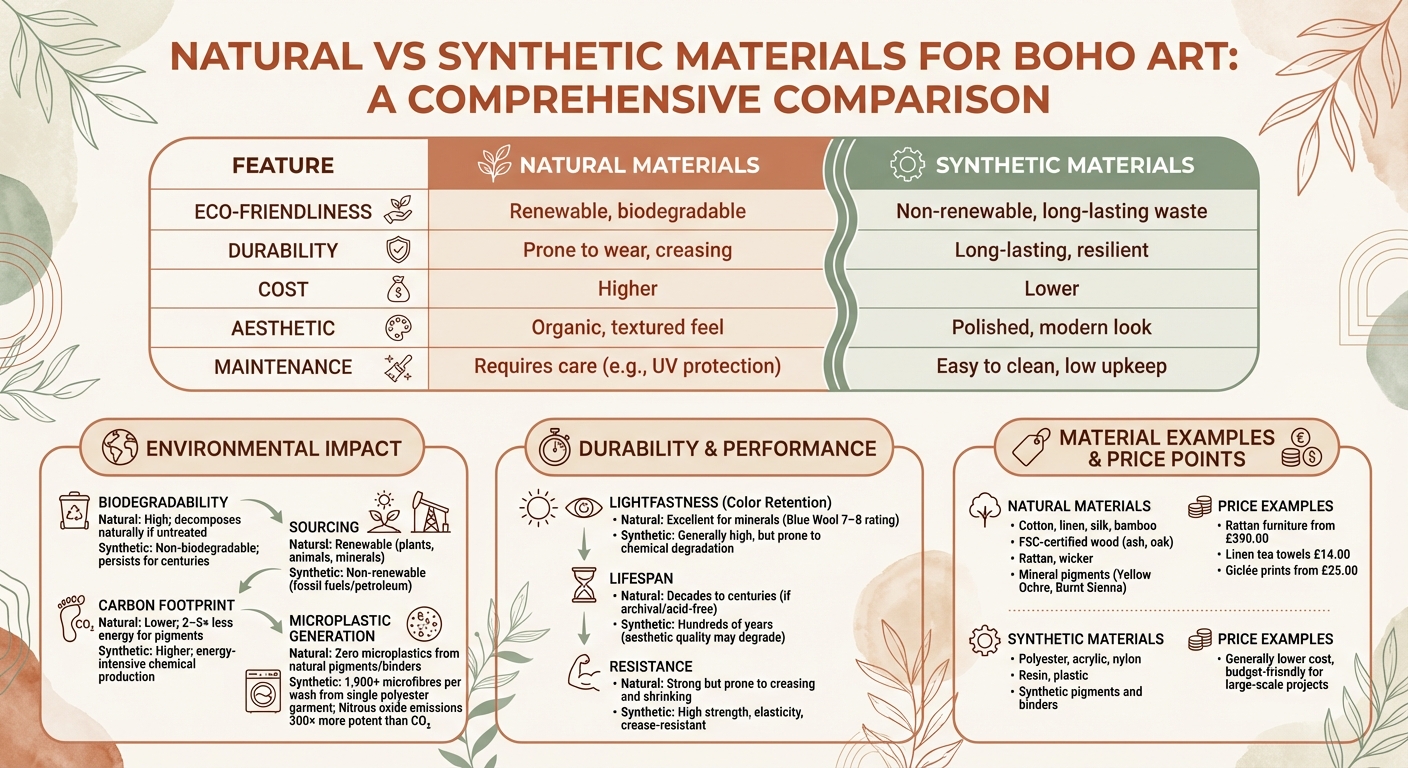
Natural vs Synthetic Materials for Boho Art: Complete Comparison Guide
Natural Materials for Boho Art
Natural materials are at the heart of boho design, offering both texture and an organic touch. Fabrics like cotton, linen, silk, and bamboo, along with FSC-certified wood, bring a tactile richness to bohemian aesthetics. As Joanna Bailey from Contrado explains:
"Raw, natural materials like these are spun into threads, then woven or knitted into natural fabrics and yarns."
These materials perfectly complement the bohemian love for layered textures and eclectic design. Linen, for example, drapes beautifully and adds an airy, summery feel, while silk enhances art pieces with its ability to retain vibrant colours. Sustainably sourced wood, such as ash or oak, provides both durability and a natural grain finish that aligns with the boho aesthetic. Meanwhile, materials like rattan, wicker, and other organic textiles contribute to the relaxed, earthy vibe characteristic of this style.
Beyond their visual appeal, natural fibres are also eco-friendly. They’re biodegradable, renewable, and carbon-neutral. Organic cotton, grown without pesticides and using less water, adheres to standards like the Global Organic Textile Standard. These features not only enhance the sensory experience but also support sustainable living.
Benefits of Natural Materials
In addition to their environmental advantages, natural materials come with practical perks. Many are hypoallergenic, making them ideal for home art displays where air quality matters. When paired with reactive dyes, fabrics like silk and linen achieve vivid, long-lasting colours, ensuring that art pieces remain vibrant over time.
Natural fibres also provide a tactile experience that aligns with the bohemian focus on well-being. For instance, 260gsm canvas offers a sturdy and textured surface, ideal for art reproductions. Frames made from FSC-certified wood ensure that the materials are sourced responsibly. For budget-conscious creators, printing with pigment inks on natural fabrics offers a cost-effective way to maintain the organic aesthetic without breaking the bank.
Drawbacks of Natural Materials
Despite their many advantages, natural materials do come with some challenges. Cost is a significant factor - rattan furniture, like the Zara Chocolate Rattan Accent Chair, can start at £390.00, while smaller items such as linen tea towels are priced around £14.00. High-end materials, such as 100% pure silk, tend to be even more expensive.
Maintenance is another consideration. Art made from natural paper or canvas is vulnerable to light damage, making UV-protected acrylic glazing (offering 90% ultraviolet protection) a must to prevent fading. Additionally, finding sustainably sourced options that meet FSC certification can sometimes be a challenge due to limited availability.
sbb-itb-78c8b21
Synthetic Materials for Boho Art
Natural materials bring a timeless texture and warmth to bohemian design, but synthetic alternatives are making their mark with modern durability and versatility. Materials like resin, acrylic, polyester, and plastic are increasingly used in contemporary boho art, offering practical benefits such as being waterproof, lightweight, and easy to shape. You’ll often see these materials in acrylic-framed artwork, polyester velvet, and faux fur, blending the earthy charm of boho with a sleek, contemporary touch.
According to Lazerian, the appeal of synthetic materials lies in their "freedom of form, repeatability, and strength". Unlike wood or stone, these materials enable artists to craft intricate designs with precision and consistency. For example, an acrylic print can withstand humid conditions without warping, and resin art maintains its vibrant colours over time. These qualities make synthetic materials a flexible choice for various design settings, offering a balance of performance and creativity.
Advantages of Synthetic Materials
One major advantage is cost-efficiency. Synthetic materials are typically more affordable and durable, especially in high-traffic environments. Unlike natural fibres, which can degrade over time, synthetics deliver consistent quality, ensuring reliable results. This predictability is particularly useful for large-scale art projects or when multiple identical pieces are needed. Additionally, recycled materials like polyester and plastic offcuts are gaining traction in creating textile art and sustainable fashion. Joanna Bailey from Contrado highlights this shift, stating:
"Creating clothing made of recycled materials is a much-needed move away from fast fashion".
Synthetic materials are also incredibly versatile. While natural pigments require less energy to extract, synthetic pigments and binders allow for bold, vibrant colours that can endure harsh conditions. This adaptability makes them a practical choice for many artistic applications.
Challenges of Synthetic Materials
Despite their benefits, synthetic materials come with challenges. For instance, synthetic paints can release microplastics into the environment as they degrade, contributing to pollution in both aquatic and terrestrial ecosystems. Acrylic paints, in particular, contain polymer emulsions and plasticisers that dry into permanent plastic, raising environmental concerns. Researchers Kusumadewi and Putri caution:
"present significant long term risks due to persistent polymers and toxic residues, emphasising the importance of sustainable material choices in art practice".
From an aesthetic perspective, synthetic materials often lack the tactile warmth that natural materials bring to boho designs. While natural textures evoke a sense of nostalgia and imperfection, synthetic options can feel overly polished and artificial. There’s also a trade-off between durability and authenticity - a recycled plastic piece might last longer than an organic material, reducing the need for replacements, but it won’t deliver the same sensory experience.
When considering synthetic boho art marketed as "eco-friendly", it’s essential to look for certifications like the FSC recycled label or evidence of circular production processes, such as items made from fabric scraps. Balancing these pros and cons can help navigate the tension between traditional authenticity and modern innovation in boho design.
Natural vs Synthetic Materials: Direct Comparison
When selecting materials for boho art, understanding the differences between natural and synthetic options can help you make informed decisions. Each type has unique environmental impacts and performance traits that influence how your artwork looks and lasts.
Impact on the Environment
Natural and synthetic materials differ greatly in their environmental effects. Natural materials, like cotton, wool, and minerals, are derived from renewable sources such as plants and animals. In contrast, synthetic materials like polyester and nylon are created from fossil fuels like coal and petroleum. While natural materials are biodegradable, they often require significant resources to produce. On the other hand, synthetic materials are not biodegradable and can persist in the environment for centuries, contributing to pollution.
For instance, synthetic materials like nylon release nitrous oxide during production, a greenhouse gas 300 times more potent than carbon dioxide. Additionally, synthetic textiles shed microplastics during washing. A single polyester fleece garment can release over 1,900 microfibres per wash. In contrast, natural fibres, if untreated, break down naturally. As highlighted by Kusumadewi and Putri:
"All tested combinations [of natural pigments and binders] avoided microplastic generation".
Here’s a summary of the environmental factors:
| Factor | Natural Materials (e.g., Cotton, Wool, Minerals) | Synthetic Materials (e.g., Polyester, Nylon, Acrylic) |
|---|---|---|
| Biodegradability | High; decomposes naturally if untreated | Non-biodegradable; persists for centuries |
| Sourcing | Renewable (plants, animals, minerals) | Non-renewable (fossil fuels/petroleum) |
| Carbon Footprint | Lower; 2–5× less energy for pigments | Higher; energy-intensive chemical production |
| Sustainability | Can support ethical sourcing when organic | Low; contributes to resource depletion |
Durability and Longevity
Durability is another key factor when choosing materials for boho art. Synthetic fibres like polyester and nylon are known for their strength, elasticity, and resistance to creasing, making them highly durable. Natural fibres, such as cotton and linen, are strong but prone to creasing and shrinking, especially during maintenance.
When it comes to archival quality, natural materials like acid-free paper prevent yellowing and deterioration, ensuring the longevity of boho art. Mineral pigments, such as Yellow Ochre and Burnt Sienna, boast excellent lightfastness ratings (Blue Wool 7–8), maintaining their vibrancy for decades. While synthetic materials can last for hundreds of years, they may lose aesthetic appeal over time and shed particles as they degrade.
Here’s a comparison of durability factors:
| Factor | Natural Materials | Synthetic Materials |
|---|---|---|
| Resistance to Fading | Excellent for minerals (Blue Wool 7–8); variable for botanicals | Generally high, but prone to chemical degradation |
| Maintenance | May need protection from moisture and UV light | Often moisture-resistant and easier to clean |
| Expected Lifespan | Decades to centuries (if archival/acid-free) | Hundreds of years, though aesthetic quality may degrade |
The choice between natural and synthetic materials significantly impacts the durability, appearance, and environmental footprint of boho art. By considering these factors, you can select materials that align with your creative goals and values.
How Materials Affect Boho Art Design
The choice of materials plays a big role in shaping the look and feel of boho art. Natural fibres like 100% cotton or alpha cellulose are often used to create archival paper with a sturdy, high-quality finish. These materials come in both textured and smooth options, offering a soft, non-reflective surface that absorbs ink beautifully. This results in rich, vibrant colours and is ideal for fine art pieces or minimalist designs where glare-free finishes enhance the overall aesthetic.
On the other hand, synthetic papers with satin or glossy coatings bring a more polished and modern vibe. These materials boost colour saturation, making hues pop and blacks appear deeper. As Veranito explains:
"Prints with satin paper offer that bright bold pop when it comes to colours, and deep blacks that work well with the bright white surface giving fantastic contrast".
This makes glossy or satin finishes perfect for modern boho prints that use bold patterns or high-contrast photography. However, glossy surfaces can be prone to fingerprints and glare, which might not suit every setting.
The weight of the paper, measured in GSM, also influences the tactile experience. Heavyweight papers (300+ GSM) feel luxurious and are often used for premium art prints. Mid-weight options (200–250 GSM) strike a balance between durability and everyday practicality, while lightweight papers (120–150 GSM) are a cost-effective choice for posters.
Beyond paper, the authenticity and texture of materials further define boho art's aesthetic. Natural fabrics like linen, silk, and bamboo bring a breezy, effortless charm that aligns with boho's relaxed and traditional vibe. For instance, in July 2022, UK-based supplier Contrado partnered with artist CatCoq to create the "Golden Hour" collection. This collection featured 100% pure silk and cotton linen, offering a retro-inspired boho feel. It also included giclée fine art prints made with pigment-based inks and FSC-certified wooden frames, highlighting a commitment to sustainable and high-quality design.
While natural materials highlight boho's laid-back roots, synthetic alternatives cater to more contemporary boho styles. Synthetic materials are well-suited for geometric patterns and jewel-tone designs, offering enhanced durability and structural stability. Large-format canvas prints and velvet accessories, for example, can introduce bold, vibrant patterns into neutral spaces. Ultimately, the choice of material not only impacts how a piece feels but also shapes its visual and emotional impact.
How to Choose Between Natural and Synthetic Materials
Budget and Affordability
When it comes to choosing materials for boho-inspired art and homewares, your budget plays a big role. Natural materials often come with a higher price tag compared to synthetic ones, largely due to their production processes and quality. For instance, premium giclée prints - created on archival-quality natural papers - start at around £25.00 for smaller sizes like A4. Adding a frame will increase the cost but also provides protection and a ready-to-hang finish.
If you're looking to balance cost and quality, consider unframed prints on mid-weight natural paper (200–250 GSM). For textile projects, "deadstock" or "remnant" fabrics are a great option. These end-of-roll natural materials are not only high-quality but also more affordable. This approach allows you to stay within budget while aligning with your design and sustainability goals.
Your Values and Priorities
Your personal values can also guide your material choices. Natural fibres like wool, jute, cotton, and linen are renewable and biodegradable, while synthetic materials are derived from crude oil, often resulting in harmful byproducts and contributing to landfill waste for centuries.
If sustainability is a priority, consider "made to order" prints to minimise waste and look for certifications like FSC (for responsibly sourced wood frames) or GOTS (for organic cotton). For example, OMG Kitty follows a made-to-order model, ensuring items are only produced when needed, aligning with eco-friendly principles while maintaining high quality. Additionally, when ordering custom prints, check if the provider uses VOC-free or pigment-based inks to reduce chemical impact.
Design and Practical Requirements
Finally, think about how the materials will perform in your space. The practical demands of your environment should guide your decision. Synthetic materials often shine in challenging settings. For example, acrylic glazing provides 90% UV protection and is shatter-resistant, making it a smart choice for rooms with lots of natural light where prints might otherwise fade. Cast acrylic, offering 92% optical clarity and being fully recyclable, is another excellent option for such conditions.
On the other hand, natural materials bring a warm, textured charm that synthetic options rarely replicate. As Socosy highlights, they’re perfect for creating inviting, organic interiors. Use natural fibres to enhance cosy, earthy aesthetics, but lean towards synthetics for areas with heavy foot traffic or high humidity, where durability is key.
Conclusion
When selecting materials for boho art, consider factors like environmental responsibility, practical application, and your budget. Natural materials such as jute, cotton, and wood add the organic textures and earthy tones that are central to bohemian style, while synthetic materials offer greater durability and resistance to fading - perfect for spaces like bathrooms or rooms with lots of sunlight.
Tailor your choice of materials to the specific needs of the room. Natural fibres work best in indoor, cosy spaces, while synthetic options excel in areas with high humidity or direct sunlight. If sustainability is a priority, look for FSC-certified wood frames or GOTS-certified textiles. Alternatively, made-to-order prints are a great way to reduce waste.
While natural materials often come with a higher price tag, there are budget-friendly options, such as unframed prints on 210gsm fine art poster paper. Synthetic materials, on the other hand, provide affordable solutions for larger-scale décor.
Take, for instance, the collection from OMG Kitty. With over 200 five-star reviews, their boho art prints balance quality and accessibility. Printed on 210gsm fine art poster paper, these designs are available in four sizes - A4, A3, A2, and A1 - and can be paired with optional wooden frames in oak, white, or black. Their made-to-order approach not only supports eco-conscious values but also ensures professional quality, showing that you can embrace sustainability without compromising on style.
FAQs
What are the environmental advantages of using natural materials in boho art?
Using natural materials in boho art brings a host of environmental perks. Take bamboo paper, for instance - it's a more resource-efficient choice compared to traditional wood-based papers. Bamboo grows quickly, uses less water, and can be harvested multiple times without damaging the plant. Similarly, natural pigments and mineral-based inks are kinder to the planet, breaking down safely without introducing the harmful chemicals often found in synthetic dyes.
Eco-friendly practices like print-on-demand production and using recycled or compostable packaging further cut down on waste and help keep landfills from overflowing. Plus, by choosing durable, eco-conscious materials, boho-style prints stand the test of time, meaning fewer replacements and a smaller carbon footprint. Embracing natural materials doesn’t just conserve resources - it actively contributes to a cleaner, greener world.
Are natural or synthetic materials better for durability and maintenance in boho art?
Natural materials, such as bamboo paper and mineral-based pigments, are often appreciated for their environmentally friendly nature and natural charm. However, they tend to need a bit more attention to maintain their quality, particularly in areas with high humidity or exposure to direct sunlight.
In contrast, synthetic materials are generally more durable and better equipped to handle environmental challenges, making them simpler to care for over time.
Ultimately, the decision comes down to what matters most to you. If reducing environmental impact and embracing a natural look are top priorities, natural materials might be the way to go. But if you value durability and low maintenance, synthetic options may better suit your needs.
What should I consider when choosing natural or synthetic materials for boho art in busy spaces?
When choosing materials for boho-style art in busy spaces like hallways, living rooms, or cafés, it’s essential to strike a balance between style and practicality. Natural materials, such as bamboo paper or reclaimed wood frames, add a cosy, earthy vibe that perfectly suits boho aesthetics. However, they can be more vulnerable to damage from wear, moisture, or sunlight. On the other hand, synthetic options, like coated fine-art paper or acrylic canvases, are often more robust, easier to clean, and better at resisting fading in well-lit, high-traffic areas.
When making your decision, factors like durability, resistance to moisture, and UV protection are key. Synthetic materials tend to excel in these areas, while natural materials may need extra care - think protective glazing or UV-filter glass. If reducing your environmental impact matters to you, materials like FSC-certified bamboo or reclaimed wood are great sustainable choices. Ultimately, your decision will depend on whether you value the long-lasting resilience of synthetics or the organic charm of natural textures. For those seeking eco-friendly, UK-made boho art that blends practicality with style, OMG Kitty offers a selection of sustainably printed designs with customisable framing options to suit any room.